





Deepeeka
-
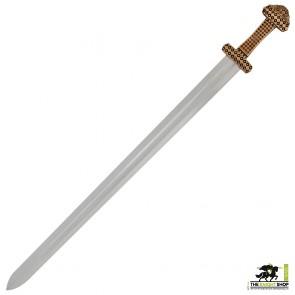
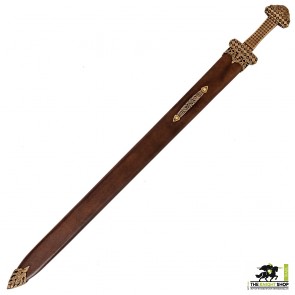
Peterson Type D Bronze Hilt Viking Sword
Based on an original in the Museum of Cultural History in Oslo, our Peterson Type D Viking Sword is typical of those wielded by Viking warriors of the 9th and 10th centuries. The ornately crafted hilt signifying that its owner was of high status. The hilt fittings have been cast in bronze and mounted using the traditional method of construction; riveting a cap over the pommel base. The grip is also cast from bronze in a similar fashion to a sword found on the Isle of Eigg in Scotland. At the base of the guard is a protective strip of felt that can be removed if required.
Learn More
It features a forged and tempered high carbon steel blade that is designed for hacking and slashing, such was the fighting style of the era. The leather bound wooden scabbard is decorated with bronze “knotwork” fittings of Norse origin and features a suspension loop allowing it to be fastened to a belt of baldric.
Total Length: 96.2cm
Blade Length: 78.4cm
Grip Length: 10cm
Weight: 1.61kg
Blade Thickness (base): 4.4mm
Blade Thickness (CoP): 4.5mm
Blade Width (base): 4.3cm
Point of Balance (PoB): 16cm
Blade: EN45 High Carbon Steel
Edge: Blunt
Pommel: Riveted and Threaded
Scabbard: Leather, Wood, Bronze
All dimensions are approximate and may vary from piece to piece. -


Stage Combat Crusader Sword
Our Stage Combat swords feature tempered, high carbon steel blades and are designed for light combat use. They have durable, thick edges, more than suitable for the rigours of stage combat and display fights. They also feature rounded tips for extra safety. Stage Combat swords are noticeably heavier than historical replicas due to the added weight afforded by the thicker edges. These swords are not designed for re-enactment use.
Learn More
Our Stage Combat Crusader Sword features an unsharpened carbon steel blade with central fuller. The grip is wood wrapped in brown leather cord and flanked with a steel guard and pommel. The unusual Oakeshott Type I1 pommel was popular on swords of the 13th and 14th centuries. Comes complete with wooden scabbard wrapped in brown leather with polished steel fittings.
Total Length: 96cm
Blade Length: 79cm
Grip Length: 11 cm
Weight: 1384g
Point of Balance: 17.5cm
Blade Thickness (base): 0.44cm
Blade Width (base): 4.4cm
Blade: High Carbon Steel
Edge: Blunt
Pommel: Peened
Scabbard: Leather, Wood, Brass
All dimensions are approximate and may vary from piece to piece. -
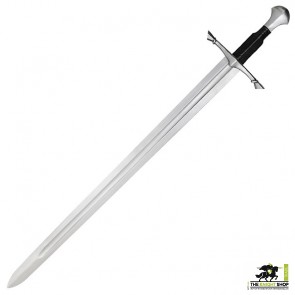
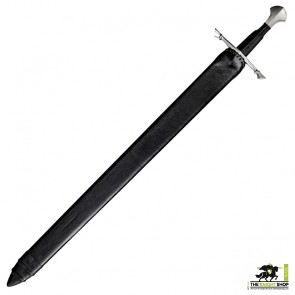
15th Century Arming Sword
Our 15th Century Arming Sword features a distinctive Type V pommel, associated with high-quality swords from the period. It features a forged, high carbon steel blade (not tempered), steel hilt fittings and a leather-bound wooden grip.
It comes complete with a wooden scabbard with black leather covering to match the grip. This sword features a blunt blade and is not suitable for combat re-enactment.
Total Length: 95cm
Blade Length: 78cm
Blade Thickness: 4.6mm
Blade Width: 5cm
Grip Length: 9.5cm
Weight: 1332g
Blade: High Carbon Steel
Edge: Blunt
Pommel: Peened
Scabbard: Leather, Wood
All dimensions are approximate and may vary from piece to piece.Buy the 15th Century Arming Sword with confidence from the UK’s leading medieval sword retailer.
Learn More -
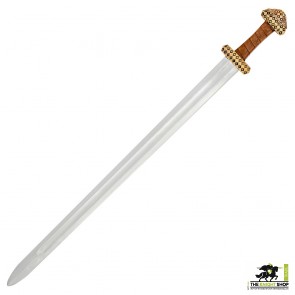
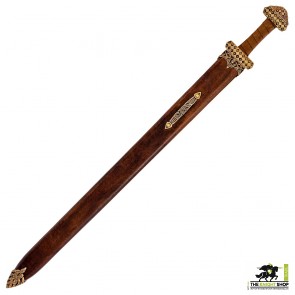
Peterson Type D Bronze Hilt Viking Sword - Leather Grip
Based on an original in the Museum of Cultural History in Oslo, our Peterson Type D Viking Sword is typical of those wielded by Viking warriors of the 9th and 10th centuries. The ornately crafted hilt signifying that its owner was of high status. The hilt fittings have been cast in bronze and mounted using the traditional method of construction; riveting a cap over the pommel base. The hardwood grip is tightly bound in leather.
Learn More
It features a forged and tempered high carbon steel blade that is designed for hacking and slashing, such was the fighting style of the era. The leather bound wooden scabbard is decorated with bronze “knotwork” fittings of Norse origin and features a suspension loop allowing it to be fastened to a belt of baldric.
Total length: 96.2 cm
Blade length: 78.4 cm
Grip length: 10 cm
Weight: 1.47 kg
Blade thickness (base): 4.8 mm
Blade thickness (CoP): 3.7 mm
Blade width (base): 4.6 cm
Point of Balance (PoB): 16 cm
Blade: EN45 High Carbon Steel
Edge: Blunt
Pommel: Nut and Riveted
Scabbard: Leather, Wood, Bronze
All dimensions are approximate and may vary from piece to piece. -


Grave 32 Vendel Chieftain’s Sword - Brass - Damascus Steel
Found whilst excavating a 6th-7th century grave at a burial site close to Uppsala in Sweden, this Vendel age sword was undoubtedly owned by a high ranking warrior of chieftain. The Vendel era comes between the Migration Period and Viking Age and their rulers had troops of elite mounted warriors that were well armed with the best weapons and armour available.
Learn More
Our Vendel Chieftain’s Sword features a highly ornate hilt, a testament to the craftsmen of the period. Like the original Vendela nd Viking swords, it features a two part pommel with a cap secured by twin rivets. This cap is decorated with deep red enamel to replicate the garnet decoration on the original. The stylised “ring” on the pommel, seen on other swords of this type, is symbolic rather than a moving functional component. The hardwood grip is tightly bound with brown leather. The hilt fittings are made from antiqued brass, and feature tin accents – giving the appearance of silver. It features a Damascus steel blade that is designed for hacking and slashing, such was the fighting style of the era.
The leather bound wooden scabbard features antiqued brass fittings and a suspension loop allowing it to be fastened to a belt of baldric.
Total Length: 89.5cm
Blade Length: 73.3cm
Grip Length: 11cm
Weight: 1.45kg
Blade Thickness (base): 4.3mm
Blade Thickness (CoP): 3.4mm
Blade Width (base): 5.1cm
Point of Balance (PoB): 12cm
Blade: Damascus Steel
Edge: Blunt
Pommel: Nut and Riveted
Scabbard: Leather, Wood, Brass
All dimensions are approximate and may vary from piece to piece. -


Fetter Lane Anglo-Saxon Sword - Tin Plated
This exquisite example of an 8th century Anglo-Saxon sword is based on the surviving parts of an original found in Fetter Lane, London in the 19th century and now on display in the British Museum.
Learn More
Such a highly crafted sword would be reserved for the elite of Anglo-Saxon society. The grip is decorated on both sides. On one side a spiral of four snakes separated by undulating leafy stems, the other a spread-eagled beast with gaping jaws in profile encircles its body with its zoomorphic tail, against a background of leafy shoots. The pommel cap, riveted into place like the original, features a central element decorated with a formalised tendril pattern, on one side alternating with bird heads. The hilt is constructed from cast brass and plated with tin, much prized for its silver like appearance. Its brass accents shine like gold. It features a forged and tempered high carbon steel blade that is designed for hacking and slashing, such was the fighting style of the era.
The leather bound wooden scabbard features plated brass fittings and a suspension loop allowing it to be fastened to a belt of baldric.
Total Length: 93.3cm
Blade Length: 78.5cm
Grip Length: 8.5cm
Weight: 1.45kg
Blade Thickness (base): 4.5mm
Blade Thickness (CoP): 3.1mm
Blade Width (base): 4.6cm
Point of Balance (PoB): 9.8cm
Blade: EN45 High Carbon Steel
Edge: Blunt
Pommel: Nut and Riveted
Scabbard: Leather, Wood, Silvered Brass
All dimensions are approximate and may vary from piece to piece. -


Fetter Lane Anglo-Saxon Sword - Brass
This exquisite example of an 8th century Anglo-Saxon sword is based on the surviving parts of an original found in Fetter Lane, London in the 19th century and now on display in the British Museum.
Learn More
Such a highly crafted sword would be reserved for the elite of Anglo-Saxon society. The grip is decorated on both sides. On one side a spiral of four snakes separated by undulating leafy stems, the other a spread-eagled beast with gaping jaws in profile encircles its body with its zoomorphic tail, against a background of leafy shoots. The pommel cap, riveted into place like the original, features a central element decorated with a formalised tendril pattern, on one side alternating with bird heads. The hilt is constructed from antiqued brass with tin plated fittings that shine like silver. It features a forged and tempered high carbon steel blade that is designed for hacking and slashing, such was the fighting style of the era.
The leather bound wooden scabbard features antiqued brass fittings and a suspension loop allowing it to be fastened to a belt of baldric.
Total Length: 93.3cm
Blade Length: 78.5cm
Grip Length: 8.5cm
Weight: 1.45kg
Blade Thickness (base): 4.5mm
Blade Thickness (CoP): 3.1mm
Blade Width (base): 4.6cm
Point of Balance (PoB): 9.8 m
Blade: EN45 High Carbon Steel
Edge: Blunt
Pommel: Nut and Riveted
Scabbard: Leather, Wood, Brass
All dimensions are approximate and may vary from piece to piece. -


Champagne Sword (Sabre à Champagne) for Sabrage
Napoleon once said “"Champagne! In victory one deserves it; in defeat one needs it”. During the many parties to celebrate his victories, his light cavalry (Hussars) would open the champagne bottles with their sabres. It proved such a spectacle that this practice was adopted for ceremonial use and continues to both delight and amaze onlookers to this day.
The wielder must slide the sabre along the body of the bottle to break the neck away, leaving the neck of the bottle open and ready to pour. The cork and collar remain together after separating from the neck. The first glass poured should always be checked for small glass shards.
Our Champagne Sword is designed to resemble the French Briquet Sabres of the Napoleonic Period. It is constructed from stainless steel to require minimum maintenance and features a blunt blade which is perfect for the art of sabrage. Comes complete with a velvet covered and lined presentation case.Blade Length: 29cm
Learn More
Blade Width: 3.9cm
Blade Thickness: 0.6cm
Grip: 10cm
Edge: Blunt
All dimensions are approximate and may vary from piece to piece. -
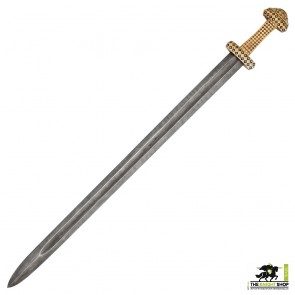

Peterson Type D Bronze Hilt Viking Sword - Damascus Steel
Based on an original in the Museum of Cultural History in Oslo, our Peterson Type D Viking Sword is typical of those wielded by Viking warriors of the 9th and 10th centuries. The ornately crafted hilt signifying that its owner was of high status. The hilt fittings have been cast in bronze and mounted using the traditional method of construction; riveting a cap over the pommel base. The grip is also cast from bronze in a similar fashion to a sword found on the Isle of Eigg in Scotland. At the base of the guard is a protective strip of felt that can be removed if required.
Learn More
The blade was formed by twisting bars of steel around each other, welding the bars together by hammering and then repeating the process to create this distinct chevron pattern. The leather-bound wooden scabbard is decorated with bronze “knotwork” fittings of Norse origin and features a suspension loop allowing it to be fastened to a belt of baldric.
Total Length: 96.2cm
Blade Length: 78.4cm
Grip Length: 10cm
Weight: 1.61kg
Blade Thickness (base): 4.4mm
Blade Thickness (CoP): 4.5mm
Blade Width (base): 4.3cm
Point of Balance (PoB): 16cm
Blade: EN45 High Carbon Steel
Edge: Blunt
Pommel: Riveted and Threaded
Scabbard: Bronze
All dimensions are approximate and may vary from piece to piece. -
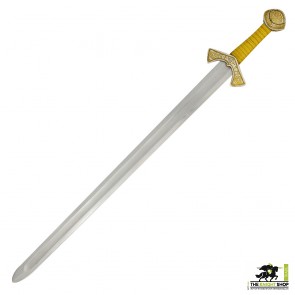

Langeid Viking Sword
The sword was discovered during an archaeological dig in Setesdalen. A hilt embellished with signs and an inscription was extremely unusual during the Viking Age and we are still not sure what the letters mean. Some of the signs are inverted while others are written sideways. The letters could be references to verses from the Bible or prayers, or copies of characters on Anglo Saxon coins. One theory is that the sword was brought to Norway from England.
Learn More
The numerous crosses on the hilt depict Christian motifs, as does the portrayal of a hand holding a cross. This sword bedecked with Christian symbolism was finally placed in a heathen grave. The exceptional Langeid Sword speaks to us of journeys, warriors and a time when the world of the Vikings was coming to an end with the advent of the Christian Middle Ages. The sword is on display at the Museum of Cultural History in Oslo.
Total Length: 90cm
Blade Length: 73.5cm
Grip Length: 11cm
Weight: 1.33kg
Blade Thickness (base): 4.4mm
Blade Thickness (CoP): 3.3mm
Blade Width (base): 4.8cm
Point of Balance (PoB): 9cm
Blade: EN45 High Carbon Steel
Edge: Blunt
Pommel: Nut and Riveted
Scabbard: Leather, Wood, Brass
All dimensions are approximate and may vary from piece to piece.