





Deepeeka
-
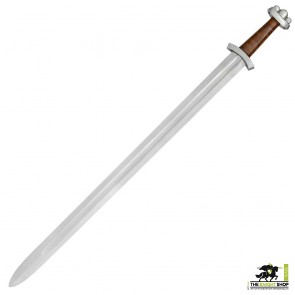
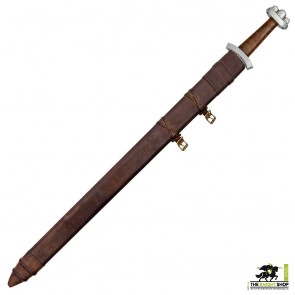
Three Lobe Viking Sword
On the 8th June 793 the first Viking attack is recorded in England. The abbey of Lindisfarne in Northumbria, a centre of learning that was famous across Europe was destroyed in a Viking raid. Monks were killed or taken away as slaves and the church treasures were taken away. From this moment onwards, Viking raids on England became more frequent until they were eventually defeated in a series of battles by King Alfred the Great. The last Viking raid on England was defeated by King Harold II in 1066. The Vikings were ferocious warriors and saw death in battle as means to entering the Halls of Valhalla – where they could fight all day and feast all night.
Our 3 Lobe Viking Sword is based on a late Viking design from around the 11th century and is contemporary with the Battle of Stamford Bridge in 1066. A similar sword was found on Canwick Common in Norfolk and is now held in the British Museum collection.
It features a forged and fullered steel blade designed for hacking and slashing and is hilted with a short guard and 3 lobed pommel. The wooden scabbard is wrapped with brown leather to match that of the leather wrapped sword grip. Although this sword has a forged blade it is not tempered and is not suitable for combat.
Total Length: 95cm
Blade Length: 79cm
Grip Length: 10.5cm
Weight: 1352g
Blade Thickness (base): 0.6cm
Blade Width (base): 4.4cm
Point of Balance (PoB): 17cm
Blade: EN45 High Carbon Steel
Edge: Blunt
Pommel: Peened
Scabbard: Wood, Leather
All dimensions are approximate and may vary from piece to piece.Buy the Three Lobe Viking Sword with confidence from the UK’s leading Viking sword retailer.
Learn More -
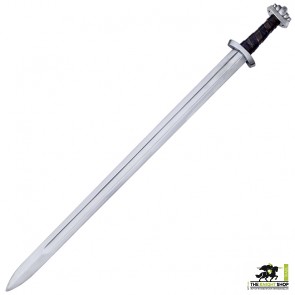
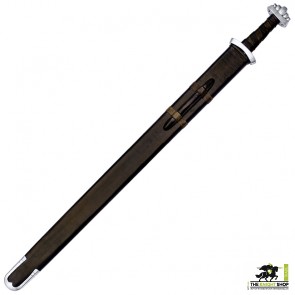
Five Lobe Viking Sword
On the 8th June 793 the first Viking attack is recorded in England. The abbey of Lindisfarne in Northumbria, a centre of learning that was famous across Europe was destroyed in a Viking raid. Monks were killed or taken away as slaves and the church treasures were taken away. From this moment onwards, Viking raids on England became more frequent until they were eventually defeated in a series of battles by King Alfred the Great. The last Viking raid on England was defeated by King Harold II in 1066. The Vikings were ferocious warriors and saw death in battle as means to entering the Halls of Valhalla – where they could fight all day and feast all night.
Our 5 Lobe Viking Sword is based on a late Viking design from around the 11th century and is contemporary with the Battle of Stamford Bridge in 1066. A similar sword held in the British Museum collection was reputed to be taken from the tomb of the Earl of Pembroke in Temple Church, but was probably found in the River Thames at Temple Church.
It features a forged and fullered steel blade designed for hacking and slashing and is hilted with a short guard and 5 lobed pommel. The wooden scabbard is wrapped with brown leather to match that of the leather wrapped sword grip. Although this sword has a forged blade it is not tempered and is not suitable for combat.
Total Length: 96cm
Blade Length: 78cm
Grip Length: 11cm
Weight: 1278g
Blade Thickness (base): 0.46cm
Blade Width (base): 4.45cm
Point of Balance (PoB): 16cm
Blade: EN45 High Carbon Steel
Edge: Blunt
Pommel: Peened
Scabbard: Wood, Leather
All dimensions are approximate and may vary from piece to piece.Buy the Five Lobe Viking Sword with confidence from the UK’s leading Viking sword retailer.
Learn More -
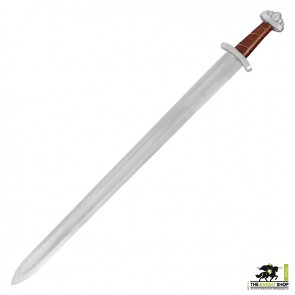
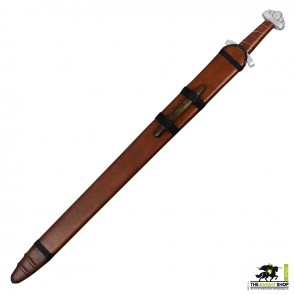
Stage Combat Five Lobe Viking Sword
Our Stage Combat swords feature tempered, high carbon steel blades and are designed for light combat use. They have durable, thick edges, more than suitable for the rigours of stage combat and display fights. They also feature rounded tips for extra safety. Stage Combat swords are noticeably heavier than historical replicas due to the added weight afforded by the thicker edges. These swords are not designed for re-enactment use.
This sword is hand crafted from EN45 carbon spring steel, featuring a broad, straight-edged blade with a wide fuller down its center. The fuller stops about one-fifth the blade-length away from the rounded tip, helping to give the sword balance and better weight, without detracting from its durability and rigid strength.
Learn More
The cast-steel guard is gently concaved and turned towards the blade, while its small size is a classic feature of Migration era swords. The grip is wrapped in leather and offers a secure hold, while the ornate, five-lobed pommel acts as a distinctive and unique feature that sets this sword apart from the run-of-the-mill blades. It comes complete with a leather wrapped, wooden scabbard.
Total Length: 96.5cm
Blade Length: 80cm
Blade Width: 5cm
Edge Thickness: 1.5mm - 2mm
Edge: Blunt
Weight: 1330g
Scabbard: Leather, Wood
All dimensions are approximate and may vary from piece to piece. -
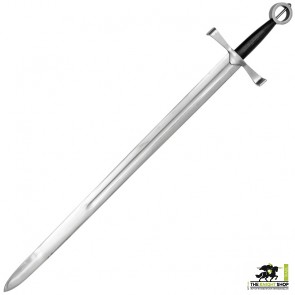
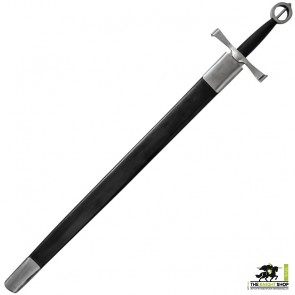
Irish Ring Hilt Sword
During the Medieval and Renaissance periods weapons imported from Europe influenced Irish weapon design. However, the Irish introduced their own design features that are somewhat unique to Ireland. The most iconic of these is the “Ring Pommel” which shows the sword tang running through the middle of it. These swords were often finely made and were wielded by the might Gallowglass warriors.
Our Irish Ring Hilt sword features a high carbon steel blade with central fuller, polished steel hilt fittings and a leather wrapped wood grip. It comes complete with a leather wrapped wooden scabbard with steel fittings.
Learn More
Total Length: 105cm
Blade Length: 84cm
Blade Width: 5.2cm
Blade Thickness: 0.55cm
Weight: 1686g
Point of Balance: 26.5cm
Material: EN45 High Carbon Steel
Edge: Blunt
Pommel: Threaded
Scabbard: Leather, wood
All dimensions are approximate and may vary from piece to piece. -
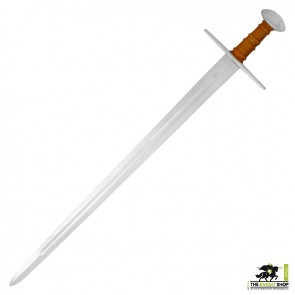

St Hadrians Sword
Inspired by the famous St. Hadrian’s Sword preserved in Germany, this Deepeeka replica captures the elegance and authority of a classic 12th-century knightly sword. Featuring a long double-edged blade, simple crossguard, and distinctive wheel pommel, it reflects the transition of medieval sword design during the High Middle Ages. The scabbard was inspired by the original piece in the Bamberg museum, Germany.
Learn More
Total Length: 97cm
Blade Length: 79cm
Blade Width: 5cm
Guard Width: 19.5cm
Grip Length: 10cm
Edge: Blunt
All dimensions are approximate and may vary from piece to piece. -
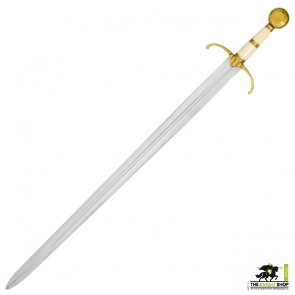
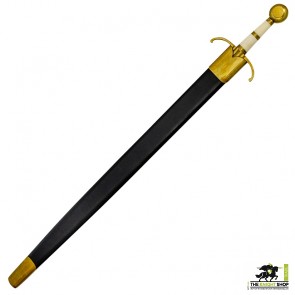
Blackfriars Sword
This Blackfriars Sword is inspired by a sword that was found in the mudbanks of the River Thames near Bull Wharf, Blackfriars. It is dated to around 1340-50 and is a typical knight's sword of the period. It is now held in the Royal Armouries collection.
Learn More
Our Blackfriars Sword has solid brass hilt fittings and a polished (camel) bone grip. The blade is hand forged from steel and is housed in a scabbard of leather covered wood with brass fittings. This item has a blunt blade and is manufactured for display only.
Matching dagger available in our Daggers section.
Total Length: 100cm
Blade Length: 83.5cm
Grip Length: 8.5cm
Weight: 1054g
Blade Thickness (base): 0.37cm
Blade Width (base): 4.2cm
Point of Balance (PoB): 23.5cm
Blade: High Carbon Steel
Edge: Blunt
Pommel: Peened
Scabbard: Leather, Wood, Brass
All dimensions are approximate and may vary from piece to piece. -
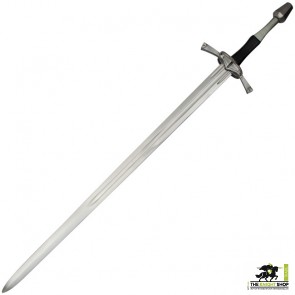
15th Century Ring Hilt Longsword
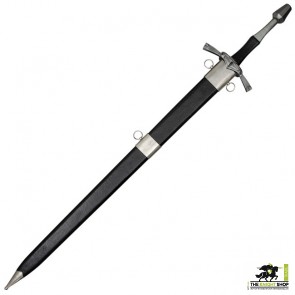
The 15th Century Ring Hilt Longsword differs from other longswords of the period in that it features “side rings” on either side of the guard. These rings provided greater protection to the hands without adding much weight to the sword. Over time, the addition of greater hand protection led more complex hit designs such as those seen on swept and basket hilt swords.
This longsword has a hand forged high carbon fullered steel blade (not tempered) with a triple fullered ricasso. The bottom half of the grip is wrapped in black leather. The top half is wire-bound for a more decorative finish and greater purchase. This sword comes complete with a well-made wooden scabbard wrapped in black leather with steel fittings and belt rings. This item has a blunt blade and is manufactured for display only.
Overall Length: 118.5cm
Blade Length: 92cm
Grip Length: 18.5cm
Guard Width: 20cm
Blade Width: 4.5cm
Weight: 1694g
Blade: High Carbon Steel
Edge: Blunt
Pommel: Peened
Scabbard: Wood, Leather, Steel
All dimensions are approximate and may vary from piece to piece.Buy the 15th Century Ring Hilt Longsword with confidence from the UK’s leading Medieval Sword retailer.
Learn More -
Gallowglass Sword
The word Gallowglass is an Anglicisation of the Irish word Gallóglaigh meaning “foreign soldiers”. They were mercenary warrior elite among Scottish clans living in the Highlands and Western Isles between the 13th and 16th century. During the 13th century they started to settle in Ireland where military chieftains would frequently use them as bodyguards as they were not subject to local feuds or influences.
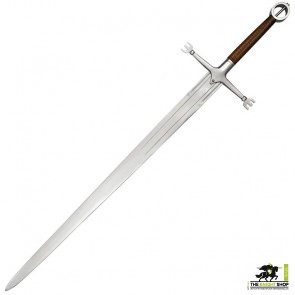
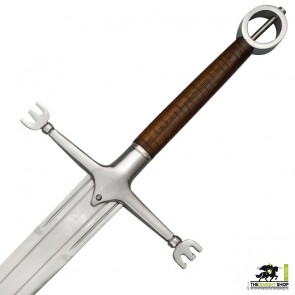
A description from 1600, speaks of the Gallowglass as "...pycked and scelected men of great and mightie bodies, crewell without compassion. The greatest force of the battell consisteth in them, chosing rather to dye than to yeelde, so that when yt cometh to handy blowes they are quickly slayne or win the fielde." They were famed for using their broadswords or claymores ("claíomh mór" - Gailic for “Great Sword”) with terrifying effect in battle.Our Gallowglass Sword features a huge forged high carbon steel blade, topped by solid steel hilt fittings and the iconic ring pommel shown in the artwork of Albrecht Dürer from 1521. The profiled wood grip is tightly bound in brown leather. This sword has a blunt blade and is designed for display only. 
Overall Length: 136cm
Blade Length: 104cm
Blade Width: 6.35cm
Blade Thickness: 0.6cm
Guard Width: 30cm
Guard Depth: 2.9cm
Grip Length: 18.5cm
Blade: High Carbon Steel
Edge: Blunt
Pommel: Peened
Scabbard: None
All dimensions are approximate and may vary from piece to piece.Buy the Gallowglass Sword with confidence from the UK’s leading Scottish sword retailer.
Learn More -


William Wallace Braveheart Sword - Brass
Sir William Wallace was a Scottish knight and one of the main leaders in the Wars of Scottish Independence. In September 1297 he defeated the English army at the Battle of Stirling Bridge. After the battle he was appointed Guardian of Scotland and served until he was defeated at the Battle of Falkirk in 1298. He continued to fight for Scottish independence until he was captured in 1305 executed in London for crimes of High Treason. In death his exploits passed into legend. Sir Walter Scott wrote about him in “Exploits and Death of William Wallace – the “Hero of Scotland”.
Wallace is best known from the 1995 blockbuster “Braveheart” starring Mel Gibson.Our William Wallace Braveheart Sword is inspired by the sword used in the film Braveheart.
It is forged from high carbon steel and features a broad blade topped with solid brass hilt fittings and a brown suede ricasso and grip. This sword features a blunt blade and is designed for display only.
Total Length: 136cm
Blade Length: 97.5cm
Grip Length: 28.6cm
Weight: 2.1kg
Blade Width (base): 4.3cm
Point of Balance (PoB): 14cm
Blade: High Carbon Steel
Edge: Blunt
Pommel: Threaded
Scabbard: None
All dimensions are approximate and may vary from piece to piece.Buy the William Wallace Braveheart Sword with confidence from the UK’s leading movie sword retailer.
Learn More -

Twisted Hilt Scottish Claymore
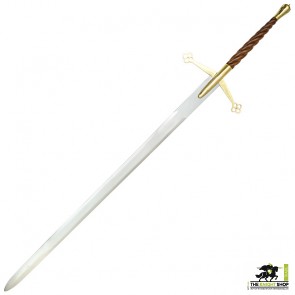
The Claymore (from the Scottish Gaelic claidheamh-mòr, meaning “great sword”) is a Scottish variant of the late medieval 2 handed sword. It differed from other longswords of the period in that it usually had forward sloping quillons terminating in quatrefoils. Claymores were in use during constant clan warfare and fights with the English from the 15th to 17th century. Claymores did exist as early as the Wars of Scottish Independence although they were smaller and few had the characteristic quatrefoil design. The last time that claymores were seen on the battlefield in any significant number was the Battle of Killiecrankie in 1689.
Our Twisted Hilt Scottish Claymore features a hand-forged high carbon steel blade topped with brass hilt fittings and a hand carved real wood grip. This sword has a blunt blade and is designed for display only.Does NOT come with a scabbard.
Overall Length: 143cm
Blade Length: 106.5cm
Grip Length: 23cm
Weight: 2294g
Blade thickness (base): 0.5cm
Blade width (base): 5cm
Point of Balance (PoB): 19.5cm
Blade: High Carbon Steel
Edge: Blunt
Pommel: Peened
Scabbard: None
All dimensions are approximate and may vary from piece to piece.Buy the Twisted Hilt Scottish Claymore with confidence from the UK’s leading Scottish sword retailer.
Learn More