

European Military Swords
-
French Briquet Cutlass
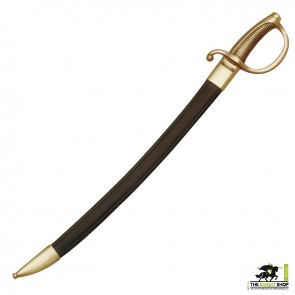
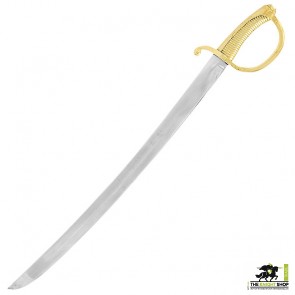
This sword is very popular with people studying cutlass drills and was carried by most of the French Infantry throughout the Napoleonic Wars. It is also very popular for opening champagne bottles!
Learn More
The polished blade has been forged from EN9 steel and has been well tempered.
Total Length: 74cm
Blade Length: 60cm
Grip Length: 10cm
Weight: 1.012kg
Blade Thickness (base): 7.2mm
Blade Width (base): 3.4cm
Point of Balance (PoB): 11cm
Blade: High Carbon Steel
Edge: Blunt
Pommel: Peened
Scabbard: Leather, Wood, Brass
All dimensions are approximate and may vary from piece to piece. -
Briquet Sabre
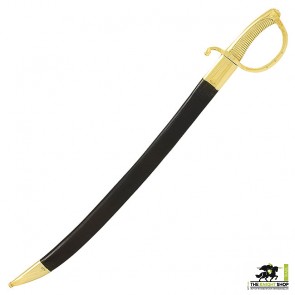
The Briquet Saber was a melee weapon used in Napoleonic Wars. It is a short, slightly curved sword with a golden handle, and was carried by most infantry units, including flag-bearers, musicians and engineers.
Learn More
The real-life saber briquet was introduced around 1780, however, soldiers found that in close quarters, bayonets or the stocks of their muskets were better suited for combat, and the order was given to abandon the saber briquet in 1807. Some regiments continued to carry them until 1815 though.
Total Length: 74cm
Blade Length: 60cm
Guard Width: 12cm
Weight: 1.6kg
All dimensions are approximate and may vary from piece to piece. -


French Imperial Marine Sabre
As the inscription the blade and the prominent anchor on the hilt attest, this sword with a wide, cutlass-like blade is a sword for a member of Napoleons Imperial Guard Marines – the Marins de la Garde Imperiale (Sailors of the Imperial Guard).
Learn More
The replica sword has blade is of tempered EN9 high carbon steel and is inscribed on both sides with an anchor framed placard of the Garde Imperiale. The base of the blade spine bears the signature of the famed Klingenthal manufactory, which produced a great many of the blades borne by Napoleons Grande Arm.
The hilt with a knuckle bar is of brass and the grip is of black leather, inlaid with twisted wire of brass. The sword scabbard is of leather with brass fittings, including two brass hanging rings.
Total Length: 85cm
Blade Length: 72cm
Grip Length: 8cm
Guard Width: 8cm
Weight: 1048g
Blade Thickness (base): 0.7cm
Blade Width (base): 4cm
Point of Balance (PoB): 27cm
Blade: High Carbon Steel
Edge: Blunt
Pommel: Peened
Scabbard: Leather, Wood, Steel
All dimensions are approximate and may vary from piece to piece. -


Napoleonic French Hussar Saber
Adept scouts and light cavalrymen, Napoleons Hussars could be counted upon to fight with speed and severity wherever they were deployed. Their attitude and fighting style derived from the original Hussars of Hungary and Poland in centuries past who perfected light cavalry tactics in their conflicts with the Turks. Their successes inspired a type of light cavalryman who could be seen in many European armies by the Napoleonic era, all following a rough outline of Hungarian-inspired dress, large moustaches, cavalier demeanor and arms.
Learn More
Understandably, the public romanticized the dashing, exotic image of the charging Hussar. This French Hussar saber is similar to other Hussar and cavalry sabers of the period who share a common ancestor in the Polish-Hungarian Szabla. After centuries of mounted warfare, the Szabla became the Hussar saber, ideally evolved for light cavalry combat. Its characteristic curve allowed for deathly sweeping slashes from on high. Its design highly influenced the British 1796 Light Cavalry Saber – a design destined to spread throughout the continent and to the United States.
Total Length: 100cm
Blade Length: 84cm
Grip Length: 11cm
Weight: 975g
Edge: Blunt
Width: 32.8mm
Thickness: 7.4 - 4.2mm
Pommel: Peened
POB: 20.3cm
Blade: EN9 High Carbon Steel
Scabbard: Leather, Steel
All dimensions are approximate and may vary from piece to piece. -
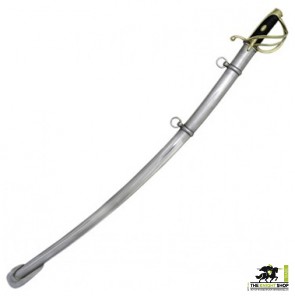
Napoleonic AN XI Light Cavalry Sabre
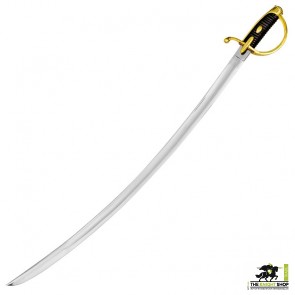
This replica saber of the AN XI has an unsharpened blade of tempered high carbon steel. The spine of the blade bears the recreated 1813 signature of the famed Klingenthal sword manufactory in Alsace. The hilt is of brass and the grip is wrapped in tight black leather. The scabbard is of steel with two integrated steel hanging rings.
Learn More
Total Length: 100cm
Blade Length: 86.5cm
Grip Length: 10cm
Weight: 1068g
Blade Thickness (base): 0.7cm
Blade Width (base): 3cm
Point of Balance (PoB): 19.5cm
Blade: EN9 High Carbon Steel
Edge: Blunt
Pommel: Peened
Scabbard: Leather, Wood, Steel
All dimensions are approximate and may vary from piece to piece. -


Polish Diplomat Sabre
The Polish 1926 Diplomatic Sword is a rare and elegant ceremonial weapon used by diplomats and high-ranking Polish officials in the interwar period (Second Polish Republic). It is a non-combat sword designed to symbolize national dignity and prestige during formal occasions.
Learn More
Total Length: 98cm
Blade Length: 79.5cm
Blade Width: 3cm
Guard Width: 10.5cm
Grip Length: 9cm
P.O.B (from guard): 17cm
Edge: Blunt
All dimensions are approximate and may vary from piece to piece. -


Russian Cossack Sabre (Shashka) - 1942 Pattern
The shashka originated among the mountain tribes of the Caucasus in the 12th or 13th century. Later most of the Russian Cossacks adopted the weapon. It gradually replaced the sabre in all cavalry units except hussars during the 19th century. Russian troops, having encountered it during their conquest of the Caucasus (1817-1864), preferred it to their issue sabres.
Learn More
The Russian Caucasian Corps first adopted it in the 1830s. In 1882 a reorganization of the cavalry saw the regular dragoons armed with the shashka. Cossacks had received this type of sword earlier. Soviet cavalry carried several forms of shashka in the Second World War. Our shashka is forged from high quality EN9 steel and the polished blade is well tempered.
Total Length: 95cm
Blade Length: 81cm
Grip Length: 7cm
Weight: 0.950kg
Blade Thickness (base): 6.3mm
Blade Thickness (CoP): 6mm
Blade Width (base): 3.1cm
Blade Width (CoP): 2.8cm
Point of Balance (PoB): 24cm
Centre of Percussion (CoP): 21cm
Blade: High Carbon Steel
Edge: Blunt
Pommel: Peened
Scabbard: Leather, Wood, Brass
All dimensions are approximate and may vary from piece to piece.