





Universal Swords
-
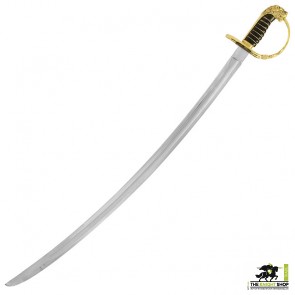
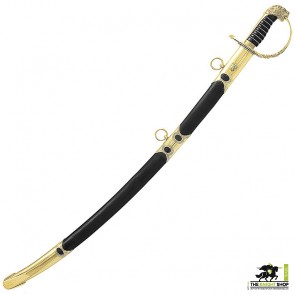
British Flank Infantry Officer's Sabre - 1803 Pattern
This sabre was introduced in 1803 and proved a popular replacement for the 1796 Infantry Sword. It was readily adopted by Light Infantry and Rifle Officers who were much more likely to skirmish with the enemy than their Line Infantry counterparts. The design proved popular and it was adopted by flank companies of the Royal Marines and some Royal Navy officers as well.
Learn More
The polished blade has been forged from AISI 1065 High Carbon Steel and has been well tempered.
Total Length: 94.5cm
Blade Length: 82cm
Grip Length: 8cm
Weight: 1.102kg
Blade Thickness (base): 7.5mm
Blade Width (base): 3cm
Point of Balance (PoB): 20cm
Blade: AISI 1065 High Carbon Steel
Edge: Blunt
Pommel: Peened
Scabbard: Leather, Wood, Brass
All dimensions are approximate and may vary from piece to piece. -


British Household Cavalry Sword - 1834 Pattern
After the Crimean War there were many changes made within British Heavy Cavalry Regiments. One of these changes was the adoption of a variation of the 1st Life Guards Sword by the 2nd Life Guards. This sword served throughout the Boer War and WWI until the regiments were amalgamated in 1922. It still serves today as the official state sword of the Life Guards. The polished blade has been forged from EN9 steel and has been well tempered.
Learn More
Total Length: 116cm
Blade Length: 99.5cm
Grip Length: 11cm
Weight: 1.202kg
Blade Thickness (base): 7.4mm
Blade Thickness (CoP): 5.5mm
Blade Width (base): 3cm
Blade Width (CoP): 2.5cm
Point of Balance (PoB): 21cm
Centre of Percussion (CoP): 30cm
Blade: AISI 1065 High Carbon Steel
Edge: Blunt
Pommel: Peened
Scabbard: Steel, Brass
All dimensions are approximate and may vary from piece to piece. -
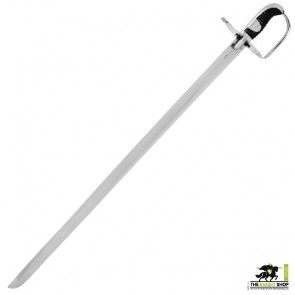
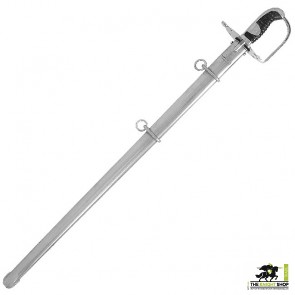
British Heavy Cavalry Sword - 1796 Pattern
The 1796 Heavy Cavalry Sword was based on the Austrian 1775 pattern sword and was used by British Heavy Cavalry regiments such as the Dragoon Guards. The large blade had incredible cutting power but was cumbersome to use. It is perhaps most famous as the sword used by Richard Sharpe of the 95th Rifles in the series of books written by Bernard Cornwell.
Learn More
The polished blade has been forged from AISI 1065 High Carbon Steel and has been well tempered.
Replacement scabbard available separately
Total Length: 102cm
Blade Length: 89cm
Grip Length: 9.5cm
Weight: 1.266kg
Blade Thickness (base): 7.3mm
Blade Thickness (CoP): 5mm
Blade Width (base): 3.4cm
Blade Width (CoP): 3cm
Point of Balance (PoB): 20cm
Centre of Percussion (CoP): 21cm
Blade: AISI 1065 High Carbon Steel
Edge: Blunt
Pommel: Peened
Scabbard: Steel
All dimensions are approximate and may vary from piece to piece. -
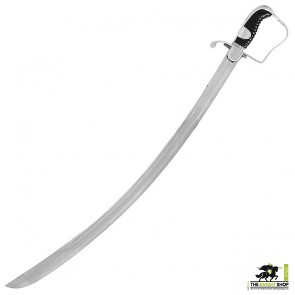
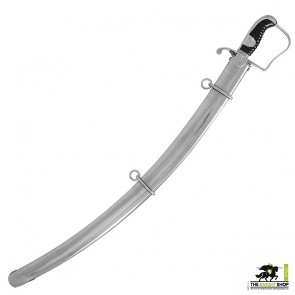
British Light Cavalry Sabre - 1796 Pattern
Famed for its use by Britain’s Light Dragoons and Hussars during the Peninsular War and Waterloo, this sword was also supplied to the Prussian Cavalry in great numbers and even found favour in the USA.
Learn More
This design was suggested for British service by cavalry officer John Gaspard Le Marchant, who believed cavalry swords should be light and have a curved, slashing blade. The long curved blade has been forged from AISI 1065 High Carbon Steel and has been well tempered.
Replacement scabbard available separately
Total Length: 96cm
Blade Length: 83cm
Grip Length: 9.5cm
Weight: 1.078kg
Blade Thickness (base): 6mm
Blade Width (base): 3.4cm
Point of Balance (PoB): 22cm
Blade: AISI 1065 High Carbon Steel
Edge: Blunt
Pommel: Peened
Scabbard: Steel
All dimensions are approximate and may vary from piece to piece. -


Russian Cossack Sabre (Shashka) - 1942 Pattern
The shashka originated among the mountain tribes of the Caucasus in the 12th or 13th century. Later most of the Russian Cossacks adopted the weapon. It gradually replaced the sabre in all cavalry units except hussars during the 19th century. Russian troops, having encountered it during their conquest of the Caucasus (1817-1864), preferred it to their issue sabres.
Learn More
The Russian Caucasian Corps first adopted it in the 1830s. In 1882 a reorganization of the cavalry saw the regular dragoons armed with the shashka. Cossacks had received this type of sword earlier. Soviet cavalry carried several forms of shashka in the Second World War. Our shashka is forged from high quality EN9 steel and the polished blade is well tempered.
Total Length: 95cm
Blade Length: 81cm
Grip Length: 7cm
Weight: 0.950kg
Blade Thickness (base): 6.3mm
Blade Thickness (CoP): 6mm
Blade Width (base): 3.1cm
Blade Width (CoP): 2.8cm
Point of Balance (PoB): 24cm
Centre of Percussion (CoP): 21cm
Blade: High Carbon Steel
Edge: Blunt
Pommel: Peened
Scabbard: Leather, Wood, Brass
All dimensions are approximate and may vary from piece to piece. -


Polish Diplomat Sabre
The Polish 1926 Diplomatic Sword is a rare and elegant ceremonial weapon used by diplomats and high-ranking Polish officials in the interwar period (Second Polish Republic). It is a non-combat sword designed to symbolize national dignity and prestige during formal occasions.
Learn More
Total Length: 98cm
Blade Length: 79.5cm
Blade Width: 3cm
Guard Width: 10.5cm
Grip Length: 9cm
P.O.B (from guard): 17cm
Edge: Blunt
All dimensions are approximate and may vary from piece to piece. -


Highland Officer’s Sword - 1828 Pattern
The 1828 Pattern Highland Officer’s Sword was issued to Officers of Scottish Highland Regiments such as the 92nd Regiment of Foot – The Gordon Highlanders. It was carried throughout many campaigns throughout the 19th Century and even saw service in WWI. Sergeants of such regiments were often issued with a plain bladed version.
Learn More
Our 1828 Pattern Highland Officer’s Sword is handcrafted like the originals and features a forged and tempered AISI1065 High Carbon Steel blade. The steel hilt features a red cloth liner, brown leather grip and red pommel tassel. The etched blade is housed in an authentically styled steel scabbard.
Total Length: 100cm
Blade Length: 81cm
Grip Length: 13cm
Weight: 1.360kg
Blade Thickness (base): 6.8mm
Blade Thickness (CoP): 5mm
Blade Width (base): 2.6cm
Blade Width (CoP): 2.5cm
Point of Balance (PoB): 9cm
Centre of Percussion (CoP): 25cm
Blade: AISI1065 High Carbon Steel
Edge: Blunt
Pommel: Nut
Scabbard: Steel
All dimensions are approximate and may vary from piece to piece. -
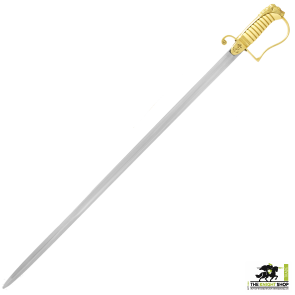
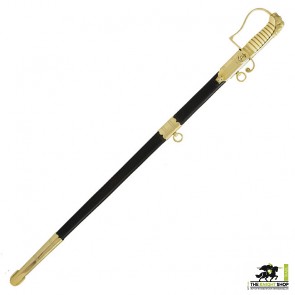
British Royal Navy Officer's Sword - 1805 Pattern
Up until 1805 the Royal Navy did not have a regulation pattern sword. The sword that was introduced was modelled on the 1803 pattern infantry sabre that was previously carried by Navy and Marine officers. The 1805 pattern sword was used by Lord Horatio Nelson and he was no doubt armed with it at his most famous battle, The Battle of Trafalgar.
Learn More
After he was killed at the battle his sword was returned to England and is now on display in the Nelson Museum, Great Yarmouth, England. This sword was in constant use until it was replaced in 1827 by a newer model.
The polished blade has been forged from AISI 1065 High Carbon Steel and has been well tempered.
Total Length: 95cm
Blade Length: 83cm
Grip Length: 10cm
Weight: 905g
Blade Thickness (base): 7.8mm
Blade Thickness (CoP): 5.3mm
Blade Width (base): 2.6cm
Blade Width (CoP): 2.2cm
Point of Balance (PoB): 18cm
Centre of Percussion (CoP): 25cm
Blade: AISI 1065 High Carbon Steel
Edge: Blunt
Pommel: Peened
Scabbard: Leather, Wood, Brass
All dimensions are approximate and may vary from piece to piece. -


British Infantry Officer's Sword - ER 1897 Pattern (Leather Scabbard)
This sword is considered by some to be the best fighting sword ever issued to a British Officer. As such it has never been replaced and is the current issue sword within the British Army.The polished blade has been forged from AISI 1065 High Carbon Steel and has been well tempered. Includes regulation pattern leather scabbard.
Learn More
Replacement steel scabbard and leather scabbard available separately.
Total Length: 98cm
Blade Length: 82.5cm
Grip Length: 10.5cm
Weight: 0.902 kg
Blade Thickness (base): 5.6mm
Blade Thickness (CoP): 4.7mm
Blade Width (base): 2.3cm
Blade Width (CoP): 2cm
Point of Balance (PoB): 14cm
Centre of Percussion (CoP): 26cm
Blade: AISI 1065 High Carbon Steel
Edge: Blunt
Pommel: Nut
Scabbard: Leather, Wood, Steel
All dimensions are approximate and may vary from piece to piece. -
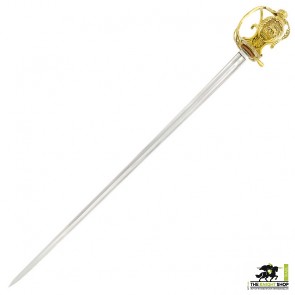
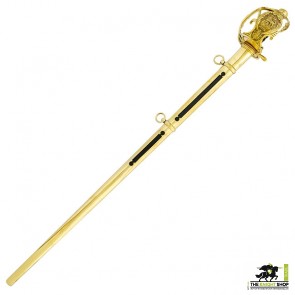
Household Cavalry Officer's Sword - 1814 Pattern
The Household Cavalry consists of the 2 most senior regiments in the British Army regiments, the Life Guards and the Blues and Royals. They were present at some of the British Army’s most notable battles, including Waterloo, where this sword would have seen action during the Charge of the Heavy Brigade.
Learn More
The styling of the Household Cavalry Officers Sword borrows much from the Prussian military ‘’Pallasch’’ swords. It features a tempered high-carbon steel blade inscribed with a “HAMBURGER & Co” makers mark to replicate an original. The ornate brass hilt encloses a leather wrapped wooden grip with twisted brass wire overlay. The wooden scabbard is covered with black leather and features an integrated brass sheath with brass hanging rings.
Total Length: 110cm
Blade Length: 96cm
Grip Length: 9.5cm
Weight: 1550g
Blade Thickness (base): 0.8cm
Blade Width (base): 3.2cm
Point of Balance (PoB): 17cm
Blade: AISI 1065 High Carbon Steel
Edge: Blunt
Pommel: Peened
Scabbard: Leather, Wood, Brass
All dimensions are approximate and may vary from piece to piece.