

Sword Brands
-
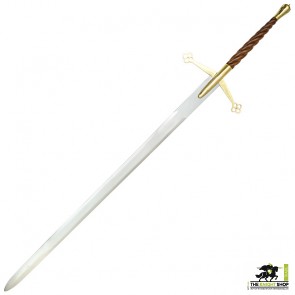

Twisted Hilt Scottish Claymore
The Claymore (from the Scottish Gaelic claidheamh-mòr, meaning “great sword”) is a Scottish variant of the late medieval 2 handed sword. It differed from other longswords of the period in that it usually had forward sloping quillons terminating in quatrefoils. Claymores were in use during constant clan warfare and fights with the English from the 15th to 17th century. Claymores did exist as early as the Wars of Scottish Independence although they were smaller and few had the characteristic quatrefoil design. The last time that claymores were seen on the battlefield in any significant number was the Battle of Killiecrankie in 1689.
Learn More
Our Twisted Hilt Scottish Claymore features a hand-forged high carbon steel blade topped with brass hilt fittings and a hand carved real wood grip. This sword has a blunt blade and is designed for display only.
Overall Length: 143cm
Blade Length: 106.5cm
Grip Length: 23cm
Weight: 2294g
Blade thickness (base): 0.5cm
Blade width (base): 5cm
Point of Balance (PoB): 19.5cm
Blade: High Carbon Steel
Edge: Blunt
Pommel: Peened
Scabbard: None
All dimensions are approximate and may vary from piece to piece. -
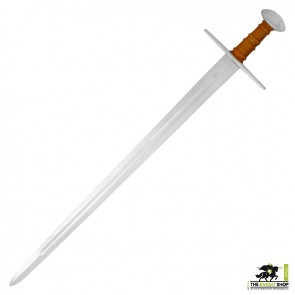

St Hadrians Sword
Sword replica based on the St Hadrians Sword from the 12th Century. The scabbard was inspired by the original piece in the Bamberg museum, Germany.
Learn More
Total Length: 97cm
Blade Length: 79cm
Blade Width: 5cm
Guard Width: 19.5cm
Grip Length: 10cm
Edge: Blunt
All dimensions are approximate and may vary from piece to piece. -
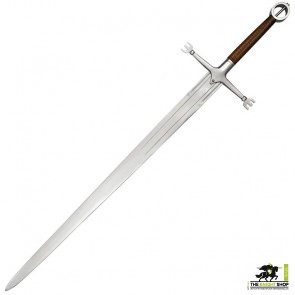
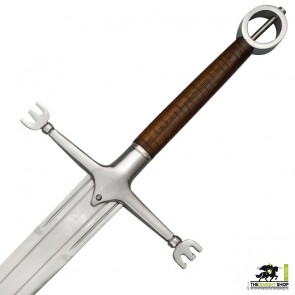
Gallowglass Sword
The word Gallowglass is an Anglicisation of the Irish word Gallóglaigh meaning “foreign soldiers”. They were mercenary warrior elite among Scottish clans living in the Highlands and Western Isles between the 13th and 16th century. During the 13th century they started to settle in Ireland where military chieftains would frequently use them as bodyguards as they were not subject to local feuds or influences.
Learn More
A description from 1600, speaks of the Gallowglass as "...pycked and scelected men of great and mightie bodies, crewell without compassion. The greatest force of the battell consisteth in them, chosing rather to dye than to yeelde, so that when yt cometh to handy blowes they are quickly slayne or win the fielde." They were famed for using their broadswords or claymores ("claíomh mór" - Gailic for “Great Sword”) with terrifying effect in battle.
Overall Length: 136cm
Blade Length: 104cm
Blade Width: 6.35cm
Blade Thickness: 0.6cm
Guard Width: 30cm
Guard Depth: 2.9cm
Grip Length: 18.5cm
Blade: High Carbon Steel
Edge: Blunt
Pommel: Peened
Scabbard: None
All dimensions are approximate and may vary from piece to piece. -
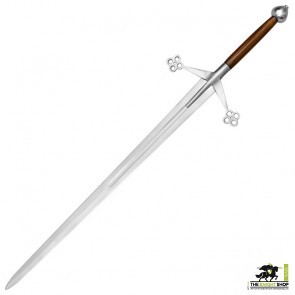
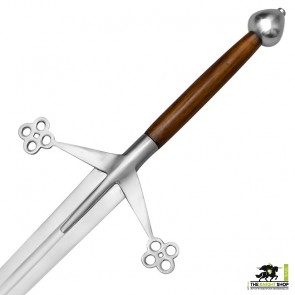
Two Handed Scottish Claymore
The Claymore (from the Scottish Gaelic claidheamh-mòr, meaning “great sword”) is a Scottish variant of the late medieval 2 handed sword. It differed from other longswords of the period in that it usually had forward sloping quillons terminating in quatrefoils. Claymores were in use during constant clan warfare and fights with the English from the 15th to 17th century. Claymores did exist as early as the Wars of Scottish Independence although they were smaller and few had the characteristic quatrefoil design. The last time that claymores were seen on the battlefield in any significant number was the Battle of Killiecrankie in 1689.
Learn More
Our Two Handed Scottish Claymore has a hand-forged high carbon steel blade topped with solid steel hilt fittings and a stained real wood grip. This sword has a blunt blade and is designed for display only.
Overall Length: 123cm
Blade Length: 92cm
Blade Width: 5.8cm
Blade Thickness: 0.5cm
Guard Width: 29cm
Guard Depth: 2.9cm
Grip Length: 19cm
Blade: High Carbon Steel
Edge: Blunt
Pommel: Peened
Scabbard: None
All dimensions are approximate and may vary from piece to piece. -


The Stirling Monument William Wallace Sword
The William Wallace Sword on display at the Stirling Monument, Scotland, is alleged to have been used by Wallace at the battles of Stirling Bridge and Falkirk. After his execution in 1305, the sword is alleged to have been sent to John de Menteith, governor of Dumbarton Castle. In 1505, accounts show that James IV of Scotland paid 26 shillings to an armourer for "binding of Wallace's sword with cords of silk" and fitting it with "a new hilt and plummet" – which would account for the 16th century style hilt. A “new scabbard and a new belt” was also purchased at that time. Legend tells that the original scabbard and belt were made from the dried skin of Hugh Cressingham, one of the English Commanders at the Battle of Stirling Bridge.
Learn More
Our William Wallace Sword is a replica of the one displayed at the Stirling Monument. It features a huge 136cm blade, the total length of the sword being an intimidating166cm! The 16th century style hilt fittings are made from solid steel and feature a leather-wrapped wooden grip. This impressive sword has a blunt blade and is designed for display only.
Please note: The extreme length of the forged blade means that it is too flexible for anything but display. The blade may also have imperfections such as a slight twist or curve (that wouldn’t be noticed when hanging on a wall unless you were looking for it). The original sword on display in the Sterling Monument, has a blade made from 3 separate swords welded together and is certainly not free from imperfections.
Overall Length: 166cm
Blade Length: 136cm
Blade Width: 5cm
Blade Thickness: 0.5cm
Guard Width: 28cm
Guard Depth: 15cm
Grip Length: 26cm
Weight: 2.6kg
Blade: High Carbon Steel
Edge: Blunt
Pommel: Threaded
Scabbard: None
All dimensions are approximate and may vary from piece to piece. -
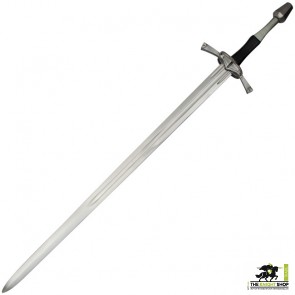
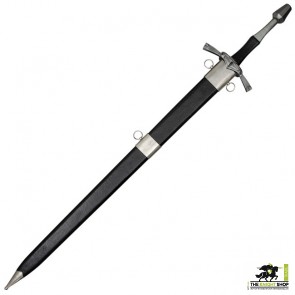
15th Century Ring Hilt Longsword
The 15th Century Ring Hilt Longsword differs from other longswords of the period in that it features “side rings” on either side of the guard. These rings provided greater protection to the hands without adding much weight to the sword. Over time, the addition of greater hand protection led more complex hit designs such as those seen on swept and basket hilt swords.
Learn More
This longsword has a hand forged high carbon fullered steel blade (not tempered) with a triple fullered ricasso. The bottom half of the grip is wrapped in black leather. The top half is wire-bound for a more decorative finish and greater purchase. This sword comes complete with a well-made wooden scabbard wrapped in black leather with steel fittings and belt rings. This item has a blunt blade and is manufactured for display only.
Overall Length: 118.5cm
Blade Length: 92cm
Grip Length: 18.5cm
Guard Width: 20cm
Blade Width: 4.5cm
Weight: 1694g
Blade: High Carbon Steel
Edge: Blunt
Pommel: Peened
Scabbard: Wood, Leather, Steel
All dimensions are approximate and may vary from piece to piece. -


Jacobite Scottish Officer's Basket Broadsword
A high-carbon steel basket hilt broadsword with leather-wrapped grip and polished pommel, inspired by the Jacobite Scottish officers’ swords of the 18th century.
Learn More
Total Length: 100cm
Blade Length: 83.4cm
Blade Width: 3.5cm
Grip Length: 10.5cm
Basket Width: 12cm
Blade Material: High-Carbon Steel
Hilt: Basket hilt
Grip: Leather-wrapped
Pommel: Polished steel
All dimensions are approximate and may vary from piece to piece. -
18th C. Stirling Basket Hilt Broadsword
Handcrafted by Deepeeka, this reproduction features a high carbon steel blade. The polished steel basket hilt follows the classic Stirling pattern with elegant scrollwork and solid knuckle guard, finished without a lining to reveal the full detail of its iron craftsmanship.
Learn More
Whether displayed as a historical showpiece or carried in period attire, this broadsword stands as a tribute to the enduring legacy of Scotland’s warrior past.
Total Length: 101cm
Blade Length: 84.5cm
Blade Width: 4cm
Guard Width: 16cm
Grip Length: 10cm
P.O.B (from guard): 10.5cm
Edge: Blunt
All dimensions are approximate and may vary from piece to piece. -
Scottish Highland Officer's Broadsword
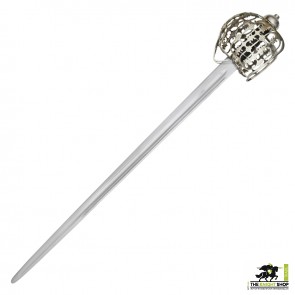
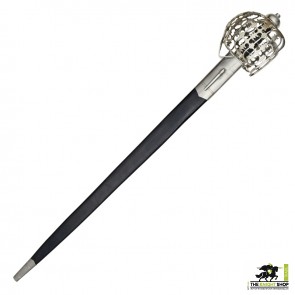
Step back in time and wield a piece of history with our meticulously crafted replica of the Eglinton “Pinch of Snuff” Scottish Highland Officer’s Broadsword. This elegant broadsword, inspired by an original from the early 19th century, epitomizes the distinctive style and valor of the Scottish Highland officers who carried it.
Learn More
Deepeeka’s replica features an authentic basket hilt design, complete with intricate steelwork and a rich blackened leather grip that mirrors the original’s craftsmanship. The blade is forged from high-quality, tempered carbon steel, ensuring both durability and an impressive historical appearance. The sword’s guard is adorned with intricate scrollwork and pierced designs, enhancing its authenticity and making it a striking display piece or a functional addition to reenactments and costume events.
Total Length: 99cm
Blade Length: 82cm
Blade Width: 4cm
Guard Width: 14cm
Grip Length: 11cm
P.O.B (from guard): 11cm
Edge: Blunt
Weight: 1310g
All dimensions are approximate and may vary from piece to piece. -
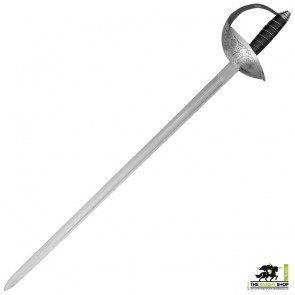
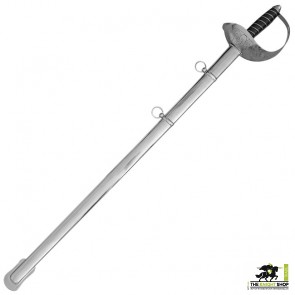
British Cavalry Sword - 1912 Pattern
The 1908 Pattern Cavalry Trooper's Sword was the last service sword issued to the cavalry of the British Army. It is widely considered the most effective cavalry sword ever designed, although ironically its introduction occurred as swords finally became obsolete as military weapons. The 1912 Pattern British Cavalry Sword was introduced for officers, who had previously carried privately purchased non-regulation swords.
Learn More
The 1912 Pattern Sword was essentially the same as the 1908 Pattern but featured more decoration. The bowl shaped guard features an engraved floral pattern that was designed to mimic the honeysuckle pattern that was seen on officer’s swords in the 19th century. This sword has a blunt forged steel blade which has not been tempered so we would only recommend it for display only. Features a steel guard, leather wrapped grip and polished steel scabbard.
Total Length: 110cm
Blade Length: 89cm
Blade Width: 3cm
Depth Thickness: 0.4cm
Guard Width: 18cm
Grip Length: 16cm
Weight: 1028g
Blade: High Carbon Steel
Edge: Blunt
Pommel: Threaded
Scabbard: Steel
All dimensions are approximate and may vary from piece to piece.