





Sword Brands
-
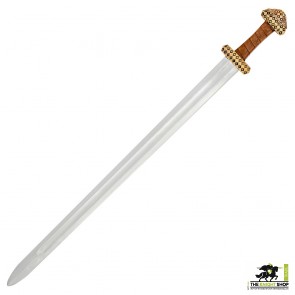
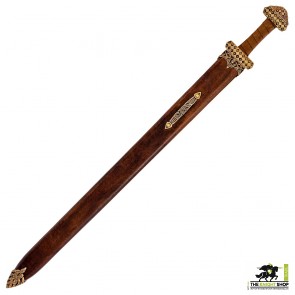
Peterson Type D Bronze Hilt Viking Sword - Leather Grip
Based on an original in the Museum of Cultural History in Oslo, our Peterson Type D Viking Sword is typical of those wielded by Viking warriors of the 9th and 10th centuries. The ornately crafted hilt signifying that its owner was of high status. The hilt fittings have been cast in bronze and mounted using the traditional method of construction; riveting a cap over the pommel base. The hardwood grip is tightly bound in leather.
Learn More
It features a forged and tempered high carbon steel blade that is designed for hacking and slashing, such was the fighting style of the era. The leather bound wooden scabbard is decorated with bronze “knotwork” fittings of Norse origin and features a suspension loop allowing it to be fastened to a belt of baldric.
Total length: 96.2 cm
Blade length: 78.4 cm
Grip length: 10 cm
Weight: 1.47 kg
Blade thickness (base): 4.8 mm
Blade thickness (CoP): 3.7 mm
Blade width (base): 4.6 cm
Point of Balance (PoB): 16 cm
Blade: EN45 High Carbon Steel
Edge: Blunt
Pommel: Nut and Riveted
Scabbard: Leather, Wood, Bronze
All dimensions are approximate and may vary from piece to piece. -
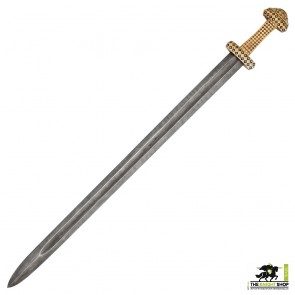

Peterson Type D Bronze Hilt Viking Sword - Damascus Steel
Based on an original in the Museum of Cultural History in Oslo, our Peterson Type D Viking Sword is typical of those wielded by Viking warriors of the 9th and 10th centuries. The ornately crafted hilt signifying that its owner was of high status. The hilt fittings have been cast in bronze and mounted using the traditional method of construction; riveting a cap over the pommel base. The grip is also cast from bronze in a similar fashion to a sword found on the Isle of Eigg in Scotland. At the base of the guard is a protective strip of felt that can be removed if required.
Learn More
The blade was formed by twisting bars of steel around each other, welding the bars together by hammering and then repeating the process to create this distinct chevron pattern. The leather-bound wooden scabbard is decorated with bronze “knotwork” fittings of Norse origin and features a suspension loop allowing it to be fastened to a belt of baldric.
Total Length: 96.2cm
Blade Length: 78.4cm
Grip Length: 10cm
Weight: 1.61kg
Blade Thickness (base): 4.4mm
Blade Thickness (CoP): 4.5mm
Blade Width (base): 4.3cm
Point of Balance (PoB): 16cm
Blade: EN45 High Carbon Steel
Edge: Blunt
Pommel: Riveted and Threaded
Scabbard: Bronze
All dimensions are approximate and may vary from piece to piece. -
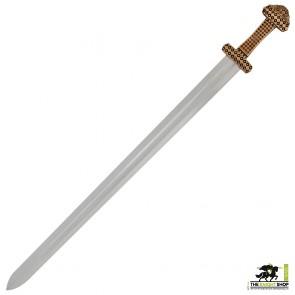
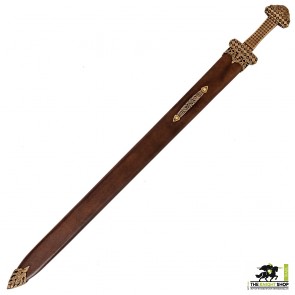
Peterson Type D Bronze Hilt Viking Sword
Based on an original in the Museum of Cultural History in Oslo, our Peterson Type D Viking Sword is typical of those wielded by Viking warriors of the 9th and 10th centuries. The ornately crafted hilt signifying that its owner was of high status. The hilt fittings have been cast in bronze and mounted using the traditional method of construction; riveting a cap over the pommel base. The grip is also cast from bronze in a similar fashion to a sword found on the Isle of Eigg in Scotland. At the base of the guard is a protective strip of felt that can be removed if required.
Learn More
It features a forged and tempered high carbon steel blade that is designed for hacking and slashing, such was the fighting style of the era. The leather bound wooden scabbard is decorated with bronze “knotwork” fittings of Norse origin and features a suspension loop allowing it to be fastened to a belt of baldric.
Total Length: 96.2cm
Blade Length: 78.4cm
Grip Length: 10cm
Weight: 1.61kg
Blade Thickness (base): 4.4mm
Blade Thickness (CoP): 4.5mm
Blade Width (base): 4.3cm
Point of Balance (PoB): 16cm
Blade: EN45 High Carbon Steel
Edge: Blunt
Pommel: Riveted and Threaded
Scabbard: Leather, Wood, Bronze
All dimensions are approximate and may vary from piece to piece. -
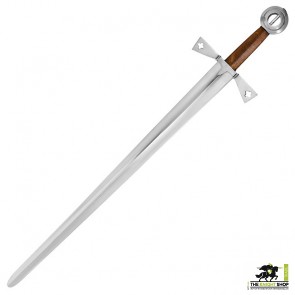
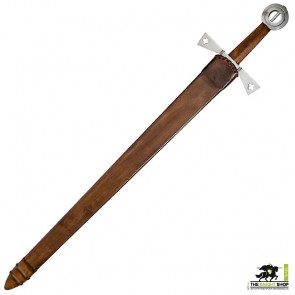
Stage Combat Gaelic Ring Hilt Sword
Our Stage Combat swords feature tempered, high carbon steel blades and are designed for light combat use. They have durable, thick edges, more than suitable for the rigours of stage combat and display fights. They also feature rounded tips for extra safety.
Learn More
Stage Combat swords are noticeably heavier than historical replicas due to the added weight afforded by the thicker edges. These swords are not designed for re-enactment use.
Overall Length: 93.5cm
Blade Length: 76cm
Blade Width: 5cm
Blade Thickness: 0.7cm
Edge Thickness: 0.2cm
Weight: 1214g
Point of Balance: 17.5cm
Material: EN45 High Carbon Steel
Edge: Blunt
Pommel: Peened
Scabbard: Leather, wood
All dimensions are approximate and may vary from piece to piece. -
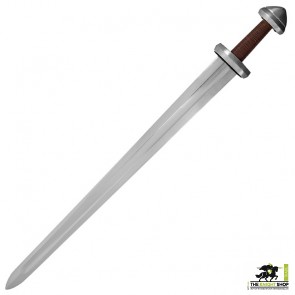
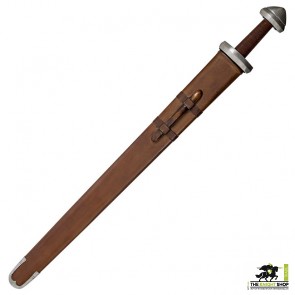
Hersir Viking Sword
Our Hersir Viking Sword is a historically accurate replica of a Viking Sword. This style of Viking era sword is referred to as a Type H hilt in Petersen's Typology and has a triangular pommel. It seems this type is typically thought to have been found extensively in Norway, but as far south as Switzerland and Yugoslavia, and that the type H seems to have been in use around the late 8th c. to into the 10th.
Learn More
The Hersir Viking Sword features a pommel and upper guard made in two parts, riveted together, with a twisted wire between the pommel and upper guard. The high carbon steel blade is housed in a leather and wood scabbard.
Total Length: 96.5cm
Blade Length: 78.5cm
Grip Length: 10.5cm
Weight: 1598g
Point of Balance: 13.5cm
Blade Thickness (base): 0.53cm
Blade Width (base): 6cm
Material: High Carbon Steel, leather
Edge: Blunt
Pommel: Peened
Scabbard: Leather, wood, steel
All dimensions are approximate and may vary from piece to piece. -


Stage Combat Crusader Sword
Our Stage Combat swords feature tempered, high carbon steel blades and are designed for light combat use. They have durable, thick edges, more than suitable for the rigours of stage combat and display fights. They also feature rounded tips for extra safety. Stage Combat swords are noticeably heavier than historical replicas due to the added weight afforded by the thicker edges. These swords are not designed for re-enactment use.
Learn More
Our Stage Combat Crusader Sword features an unsharpened carbon steel blade with central fuller. The grip is wood wrapped in brown leather cord and flanked with a steel guard and pommel. The unusual Oakeshott Type I1 pommel was popular on swords of the 13th and 14th centuries. Comes complete with wooden scabbard wrapped in brown leather with polished steel fittings.
Total Length: 96cm
Blade Length: 79cm
Grip Length: 11 cm
Weight: 1384g
Point of Balance: 17.5cm
Blade Thickness (base): 0.44cm
Blade Width (base): 4.4cm
Blade: High Carbon Steel
Edge: Blunt
Pommel: Peened
Scabbard: Leather, Wood, Brass
All dimensions are approximate and may vary from piece to piece. -


Stage Combat Knights Templar Arming Sword
Our Stage Combat swords feature tempered, high carbon steel blades and are designed for light combat use. They have durable, thick edges, more than suitable for the rigours of stage combat and display fights. They also feature rounded tips for extra safety. Stage Combat swords are noticeably heavier than historical replicas due to the added weight afforded by the thicker edges. These swords are not designed for re-enactment use.
Learn More
Our Knights Templar Arming Sword features an unsharpened carbon steel blade with central fuller. The grip is wood wrapped in brown leather and flanked with a steel guard and pommel. The pommel is emblazoned with an enamelled Templar red cross. Comes complete with wooden scabbard wrapped in brown leather with polished steel fittings.
Total Length: 95cm
Blade Length: 78cm
Grip Length: 11cm
Weight: 1328g
Point of Balance: 15cm
Guard Width: 16cm
Blade Thickness (base): 0.42cm
Blade Width (base): 4.9cm
Material: High Carbon Steel, leather
Edge: Blunt
Pommel: Peened
Scabbard: Leather, wood, steel
All dimensions are approximate and may vary from piece to piece. -


Dyback Viking Chieftain's Sword
Viking sword with silver and gold hilt, from Dyback, Skane. One of the finest swords of the Viking Age found in Scandinavia, this was either made in England or heavily influenced by English styles in work, being the Winchester style of metalwork, 8th-11th century.
Learn More
Total Length: 102cm
Blade Length: 81cm
Blade Width: 5cm
Grip Length: 17cm
Weight: 1.5kg
Blade: EN45 High Carbon Steel
Edge: Blunt
Scabbard: Wood, Leather, Brass
All dimensions are approximate and may vary from piece to piece. -


Dyback Viking Chieftain's Sword - Damascus Steel
Viking sword with silver and gold hilt, from Dyback, Skane. One of the finest swords of the Viking Age found in Scandinavia, this was either made in England or heavily influenced by English styles in work, being the Winchester style of metalwork, 8th-11th century.
Learn More
Total Length: 102cm
Blade Length: 81cm
Blade Width: 5cm
Grip Length: 17cm
Weight: 1.5kg
Blade: Damascus Steel
Edge: Blunt
Scabbard: Wood, Leather, Brass
All dimensions are approximate and may vary from piece to piece. -


Sutton Hoo Anglo-Saxon Sword
There are four kings that this sword may have belonged to: Raedwald who was overlord of the English kingdoms between AD616 and his death (at the latest in 627, probably in 625/626), Eorpwald (died 627/628) and co-regents Sigebert and Ecric, who both died fighting Penda of Mercia in AD637.
Learn More
Our Sutton Hoo Anglo-Saxon Sword is a based on the surviving components of an original found at the famous Sutton Hoo burial site. They can be seen on display at the British Museum. The composite hilt is made from wood and antiqued brass and is decorated with red enamel to resemble the garnets on the original. The hardwood grip is bound with brown leather and riveted to the hilt fittings in the same way as the original. It features a forged and tempered high carbon steel blade that is designed for hacking and slashing, such was the fighting style of the era. The leather bound wooden scabbard features antiqued brass fittings and a suspension loop allowing it to be fastened to a belt of baldric.
Total Length: 88cm
Blade Length: 73cm
Grip Length: 11cm
Weight: 1.2kg
Blade Thickness (base): 4.5mm
Blade Thickness (CoP): 3.7mm
Blade Width (base): 5.1cm
Point of Balance (PoB): 16.8cm
Blade: EN45 High Carbon Steel
Edge: Blunt
Pommel: Nut and Riveted
Scabbard: Leather, Wood, Brass
All dimensions are approximate and may vary from piece to piece.