





Medieval Arming Swords
-


El Cid “Tizona “ Sword
This Spanish ceremonial sword is characterized by branched hilt arms curved towards the blade like a floral corolla. The two-edged blade is made of steel and has a hexagonal section, while the hilt is in cast brass-plated metal with a spindle handle.
Learn More
Total Length: 105cm
Weight: 500g
Blade: Stainless Steel
Edge: Unsharpened
Scabbard: None
All dimensions are approximate and may vary from piece to piece. -


Display Plaque & El Cid "Tizona" Sword
This Spanish ceremonial sword is characterized by branched hilt arms curved towards the blade like a floral corolla. The two-edged blade is made of steel and has a hexagonal section, while the hilt is in cast brass-plated metal with a spindle handle.
Learn More
The shaped, wooden display plaque is equipped with an eyelet for hanging on the wall.
Sword:
Total Length: 105cm
Weight: 500g
Blade: Stainless Steel
Edge: Blunt
Scabbard: None
Plaque:
Length: 112cm
Width: 16cm
Weight: 970g
All dimensions are approximate and may vary from piece to piece. -

Tizona Cid Sword
Tizona is the name of the sword carried by Rodrigo Díaz de Vivar, El Cid, which was used to fight the Moors in Spain according to the Cantar de Mio Cid. The name Tizón translates to burning stick, firebrand. A sword identified with Tizona is on display at the Museo de Burgos, in Burgos.
Learn More
The Tizona, or Tizón, is one of the swords (together with La Colada) attributed to El Cid in Spanish literature. According to the Cantar de Mio Cid, El Cid won the sword from its previous owner, King Yucef in Valencia. Afterward, it was gifted by El Cid to his sons-in-law, the Infantes de Carrión but eventually returned into the possession of El Cid.
Total Length: 100cm
Blade: Stainless Steel
Edge: Blunt
Scabbard: None
All dimensions are approximate and may vary from piece to piece. -

Tizona Cid Sword - Forged
The Tizona is one of the two swords, along with the Casting , the legendary tradition attributed to the Cid, until it gave to his sons-in-law the Infantes of Carrión. The sword had been won in combat by the warrior Catalan Count of Barcelona and, despite the fact that it was given, along with Tizona, your sons-in-law the Infantes, the same was returned by them after the outrage committed on his daughters doña Elvira and Doña Sol in the town of Corpes, and that gave rise to the name of the reproach that tells the cantar de mio Cid.
Learn More
After the incident, The Cid had been disgraced and calls for justice to the king. The trial culminates with the "riepto" or duel in which the representatives of the cause of the Cid are due to the infants. They are disgraced in fair public and nullify their wedding returning also the swords. Being Cast given again by the Cid to his knight Martín Antolínez. Historians also doubt that the guarded in the Royal Palace of Madrid and shown as the sword Colada real is in fact authentic.
Total Length: 100cm
Blade: Stainless Steel
Edge: Blunt
Scabbard: None
All dimensions are approximate and may vary from piece to piece. -

Tizona Cid Sword - Brass
The Tizona is one of the two swords, along with the Casting , the legendary tradition attributed to the Cid, until it gave to his sons-in-law the Infantes of Carrión. The sword had been won in combat by the warrior Catalan Count of Barcelona and, despite the fact that it was given, along with Tizona, your sons-in-law the Infantes, the same was returned by them after the outrage committed on his daughters doña Elvira and Doña Sol in the town of Corpes, and that gave rise to the name of the reproach that tells the cantar de mio Cid.
Learn More
After the incident, the Cid had been disgraced and calls for justice to the king. The trial culminates with the "riepto" or duel in which the representatives of the cause of the Cid are due to the infants. They are disgraced in fair public and nullify their wedding returning also the swords. Being Cast given again by the Cid to his knight Martín Antolínez. Historians also doubt that the guarded in the Royal Palace of Madrid and shown as the sword Colada real is in fact authentic.
Total Length: 100cm
Blade: Stainless Steel
Edge: Blunt
Scabbard: None
All dimensions are approximate and may vary from piece to piece. -


Tizona Cid Sword - Silver
The Tizona is one of the two swords, along with the Casting , the legendary tradition attributed to the Cid, until it gave to his sons-in-law the Infantes of Carrión. The sword had been won in combat by the warrior Catalan Count of Barcelona and, despite the fact that it was given, along with Tizona, your sons-in-law the Infantes, the same was returned by them after the outrage committed on his daughters doña Elvira and Doña Sol in the town of Corpes, and that gave rise to the name of the reproach that tells the cantar de mio Cid.
Learn More
After the incident, The Cid had been disgraced and calls for justice to the king. The trial culminates with the "riepto" or duel in which the representatives of the cause of the Cid are due to the infants. They are disgraced in fair public and nullify their wedding returning also the swords. Being Cast given again by the Cid to his knight Martín Antolínez. Historians also doubt that the guarded in the Royal Palace of Madrid and shown as the sword Colada real is in fact authentic.
Total Length: 100cm
Blade: Stainless Steel
Edge: Blunt
Scabbard: None
All dimensions are approximate and may vary from piece to piece. -

Tizona Cid Cadet Sword - Forged
The Tizona is one of the two swords, along with the Casting , the legendary tradition attributed to the Cid, until it gave to his sons-in-law the Infantes of Carrión. The sword had been won in combat by the warrior Catalan Count of Barcelona and, despite the fact that it was given, along with Tizona, your sons-in-law the Infantes, the same was returned by them after the outrage committed on his daughters doña Elvira and Doña Sol in the town of Corpes, and that gave rise to the name of the reproach that tells the cantar de mio Cid.
Learn More
After the incident, The Cid had been disgraced and calls for justice to the king. The trial culminates with the "riepto" or duel in which the representatives of the cause of the Cid are due to the infants. They are disgraced in fair public and nullify their wedding returning also the swords. Being Cast given again by the Cid to his knight Martín Antolínez. Historians also doubt that the guarded in the Royal Palace of Madrid and shown as the sword Colada real is in fact authentic.
Total length: 75cm
Blade: Stainless Steel
Edge: Blunt
Scabbard: None
All dimensions are approximate and may vary from piece to piece. -

Tizona Cid Cadet Sword - Brass
The Tizona is one of the two swords, along with the Casting , the legendary tradition attributed to the Cid, until it gave to his sons-in-law the Infantes of Carrión. The sword had been won in combat by the warrior Catalan Count of Barcelona and, despite the fact that it was given, along with Tizona, your sons-in-law the Infantes, the same was returned by them after the outrage committed on his daughters doña Elvira and Doña Sol in the town of Corpes, and that gave rise to the name of the reproach that tells the cantar de mio Cid.
Learn More
After the incident, The Cid had been disgraced and calls for justice to the king. The trial culminates with the "riepto" or duel in which the representatives of the cause of the Cid are due to the infants. They are disgraced in fair public and nullify their wedding returning also the swords. Being Cast given again by the Cid to his knight Martín Antolínez. Historians also doubt that the guarded in the Royal Palace of Madrid and shown as the sword Colada real is in fact authentic.
Total Length: 75cm
Blade: Stainless Steel
Edge: Blunt
Scabbard: None
All dimensions are approximate and may vary from piece to piece. -
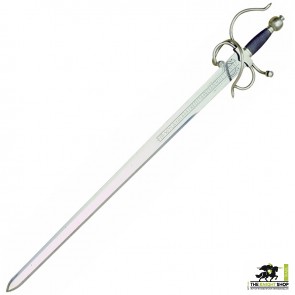

Colada Cid Sword
The Tizona and Colada Swords belonged to the Castilian knight Rodrigo Diaz de Vivar, known as "El Cid Campeador" in the 11th century. He was the prototype of the knight and a loyal vassal who took part with his king, Alphonse VI, in the conquest of Toledo. Subsequently, El Cid conquered the city, and kingdom of Valencia (which he ruled there until his death in 1099) from the Arabians (Moors). El Cid was a great war hero, a superior and extremely successful soldier of fortune, who apparently never lost a battle. To this day, Rodrigo Diaz de Vivar is known as a hero of Christian Spain, due to his excellent achievements in the Reconquest of Spain from the Moors. His title, El Cid Campeador, derives from: "El Cid", a Moorish title of respect, from Arabic al sayyid "Lord"; "Campeador" is Spanish for "Champion".
Learn More
The El Cid Colada Sword by Marto of Toledo Spain has a double-edged Toledo steel blade, with 24K Gold etching on its upper part. The hilt is of Nickel-plated cast metal with twisted quillons and knuckle-guard, grip wrapped in a metal string with the aspheric pommel.
Total Length: 100cm
Blade: Stainless Steel
Edge: Blunt
Scabbard: None
All dimensions are approximate and may vary from piece to piece. -


Colada Cid Sword - Forged
The COLADA is one of the two swords, together with the Tizona, that legendary tradition attributes to the Cid, until he gave them to his sons-in-law, the Infantes de Carrión. The sword had been won in combat by the Burgos warrior from the Count of Barcelona and, although it was given, together with the Tizona, to his sons-in-law the Infantes, it was returned by them after the affront committed against their daughters, Doña Elvira and Doña Sol in the town of Corpes and which gave rise to the name of the affront narrated by the song of Mío Cid.
Learn More
After the incident, El Cid had been disgraced and asked the king for justice. The trial culminates with the "riepto" or duel in which the representatives of the cause of the Cid defeat the infants. These are dishonored in a public joust and their weddings are annulled, also returning the swords. Colada being given again by the Cid to his knight Martín Antolínez. Historians also doubt that the one kept in the Royal Palace of Madrid and shown as the royal Colada sword is indeed the authentic one.
Total Length: 100cm
Blade: Stainless Steel
Edge: Blunt
Scabbard: None
All dimensions are approximate and may vary from piece to piece.